Exercise 1 – Collect, make, arrange
Collect objects and materials that you feel have some kind of common language.
Sketchbook 1 – Page12
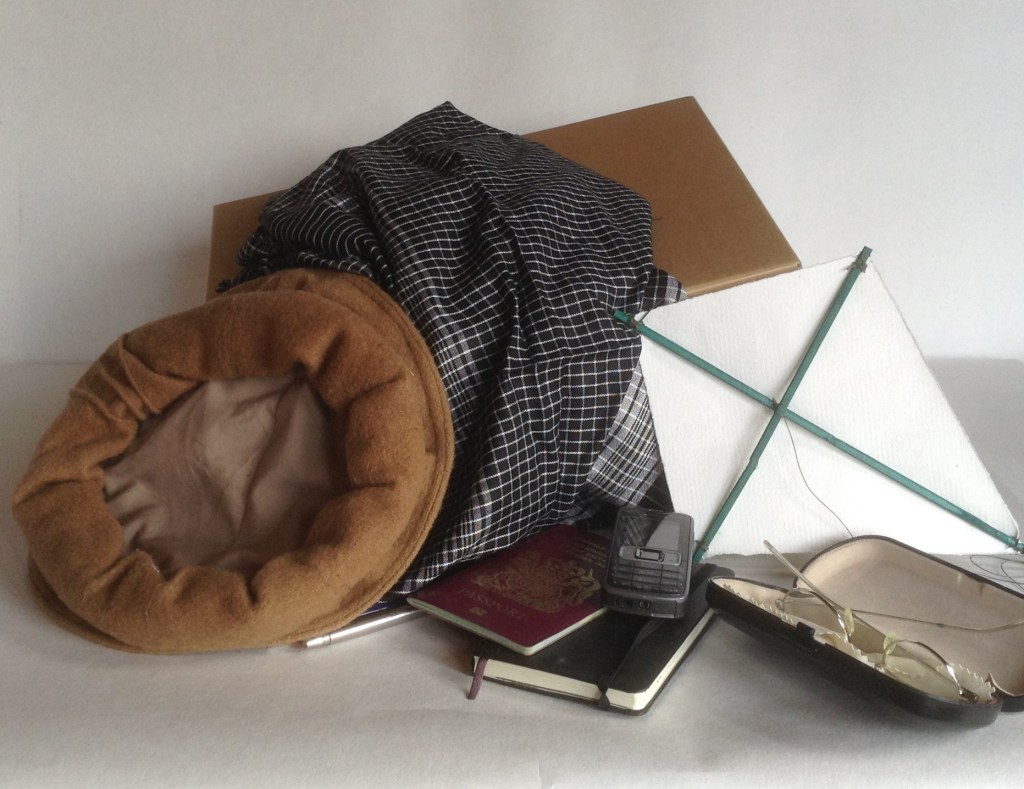
My collection is from my time in Asia. I recall that there was little sentiment for materialistic objects. Everything had a use or purpose and as such that meant being resourceful with what was available. This may account for why my time there was now captured in a small cardboard box. Until recently, and for some years now, this box had been stored in the loft of my home. It’s amazing how so few items can bring back such vivid memories. (See figure 1)

My objects included the following:
- Passport.
- Pakol. Also known as a Chitrali cap is a soft round-topped men’s hat, typically of wool and earthy colours.
- Shemagh. Whilst the shemagh may be a fashion accessory in the West, in Afghanistan it provided protection from sunburn and sandstorms in the summer, and the cold during the winter. The Shemagh had multiple and diverse uses, be it filtering water, a towel to dry your hands or face, or cover for food but to name a few.
- Mobile phone
- Notebook and pen/pencil
- Spectacles. I no longer use these spectacles but during my time in Asia, they often got damaged. There are no opticians in the Hindu Kush so it was a matter of mend and make do. I was always impressed by the ingenuity of self-taught locals to fix almost anything, including my spectacles; be that replacing the arm, refitting a lens or making the smallest of screws. Although they were simple and often crude repairs, they were always effective.
- Box. The box now contains these few items represent the mountain range of the Hindu Kush.
- Tabletop. The table surface is a sheet of MDF covered with wallpaper covering. The backing is the same, and the whole thing represents the Hindu Kush in winter – covered in snow.
Make a list of actions inspired by Richard Serra’s ‘Verb List’.
The verb list shown below (see figure 2) is reflective of my experience in Asia and the objects I have collected. Since making this list and maquette, the list has expanded.
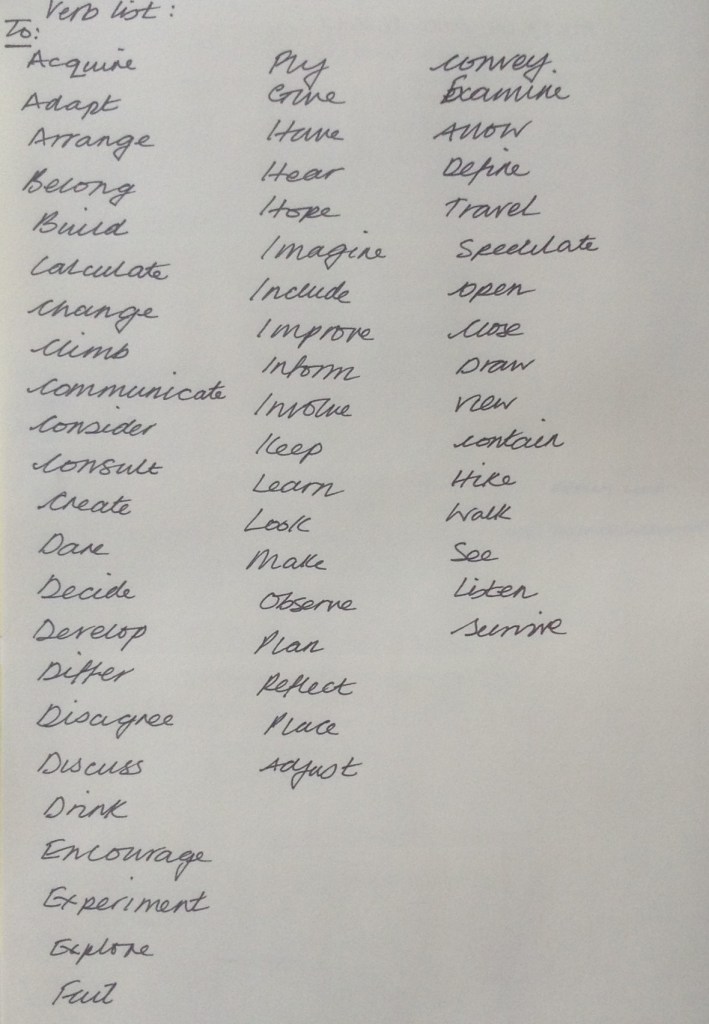
Using my list of verbs and reflecting on my travels, one thing I recalled vividly was the practice of flying kites, most notably by children in Afghanistan. The Afghans had elevated kite flying to an art form for control of the skies, not between flying machines made of metal and rivets, but between delicate airborne art constructed from paper and string.
Making a maquette kite to appear three-dimensional may have been stretching the imagination. However, working on the principle that one idea can lead to another – I persevered. My own version was a simple construction made of a bamboo stick, paper and cotton. I’m not suggesting that it would fly, and I have no doubt that no self-respecting Afghani would even consider it worthy of adorning the skies over Afghanistan. (See figure 3)

Having my collection in the corner of the studio throughout the week proved a distraction. I had mindlessly bumbled from collecting to rearranging, adding and removing objects. It was evident that the objects were too personal to present a common language. To expand on this theme, I decided to replace all objects with maquette objects made from off cuts of cardboard, paper and canvas to visualize my forms. (See figure 5)
Inevitably, the actions in creating a maquette structure resulted in further verbs being added to my list.
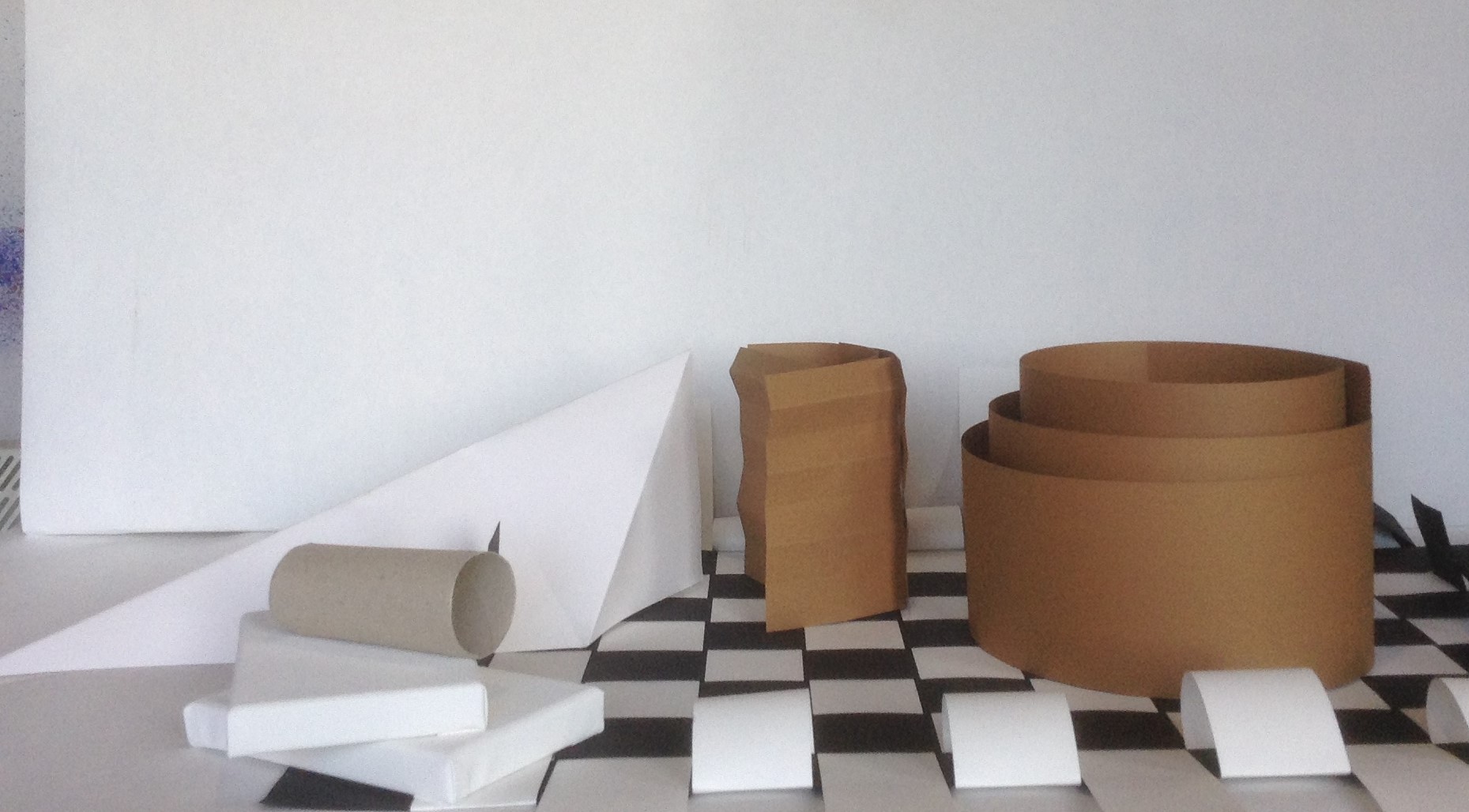
Since making one maquette I was inspired to make others. Initially I replicated the objects I already had on the table top, and then incorporated other shapes or cardboard objects. (See figure 6)

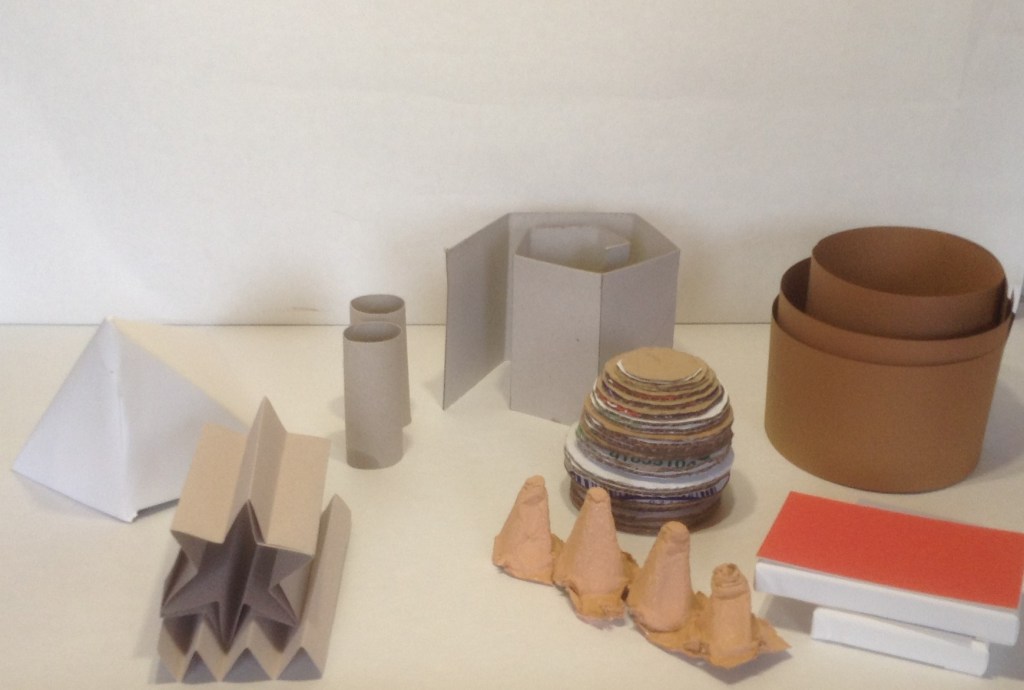
Arrange the space on a table with accumulated objects.
Georges Perec was a French novelist, filmmaker, documentarist, and essayist. In reference to his clutter that adorns his studio table and the acceptance of things as they are, in all their unmanageable randomness, I find clutter an unnecessary distraction. Even the off-cuts of paper or unused materials have their place. On reflection, I could see that my mild OCD had manifested itself subconsciously into my arrangement of objects (see below). As I write – I had yet to settle on a final arrangement.
The intertwined black and white strips of paper (the shemagh) were very dominant so I mounted it on a board and moved it around the composition to see what effect this had. The relationship between the black and white strips of paper and other objects within the composition didn’t work (see below) – so I removed it.
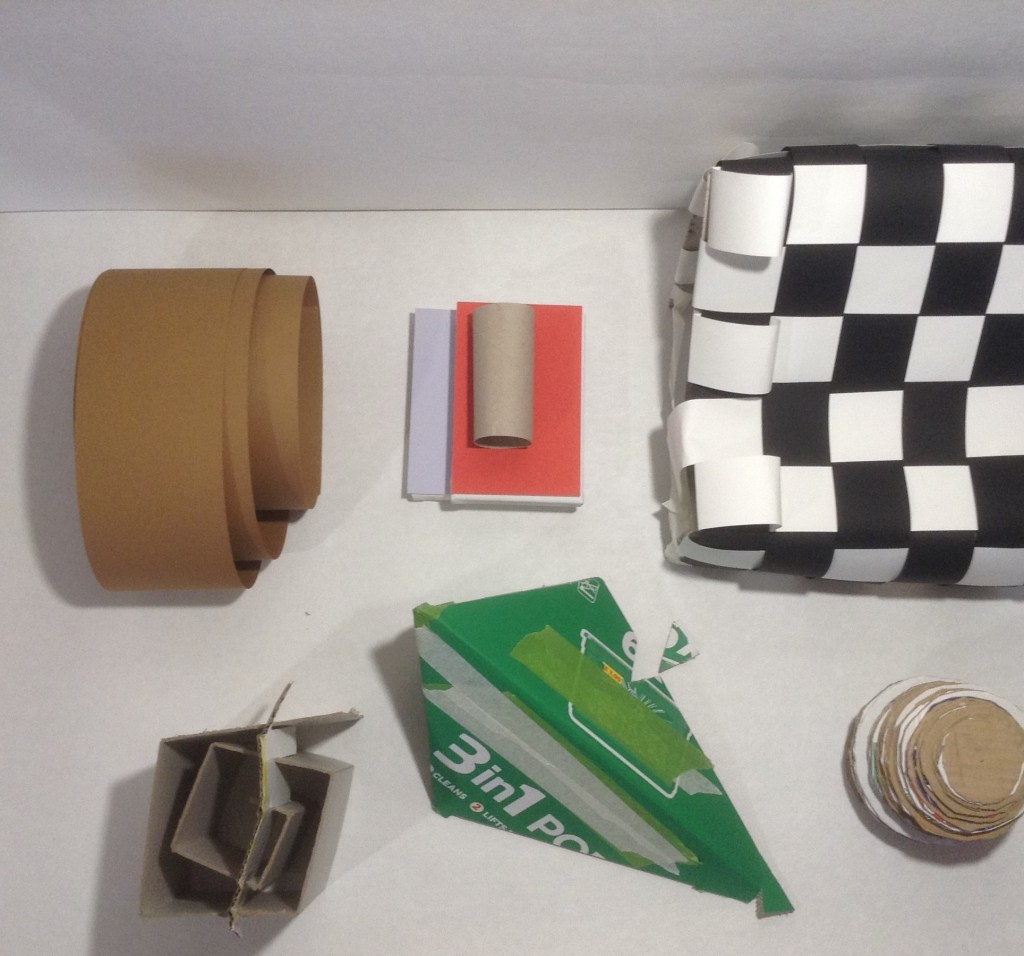

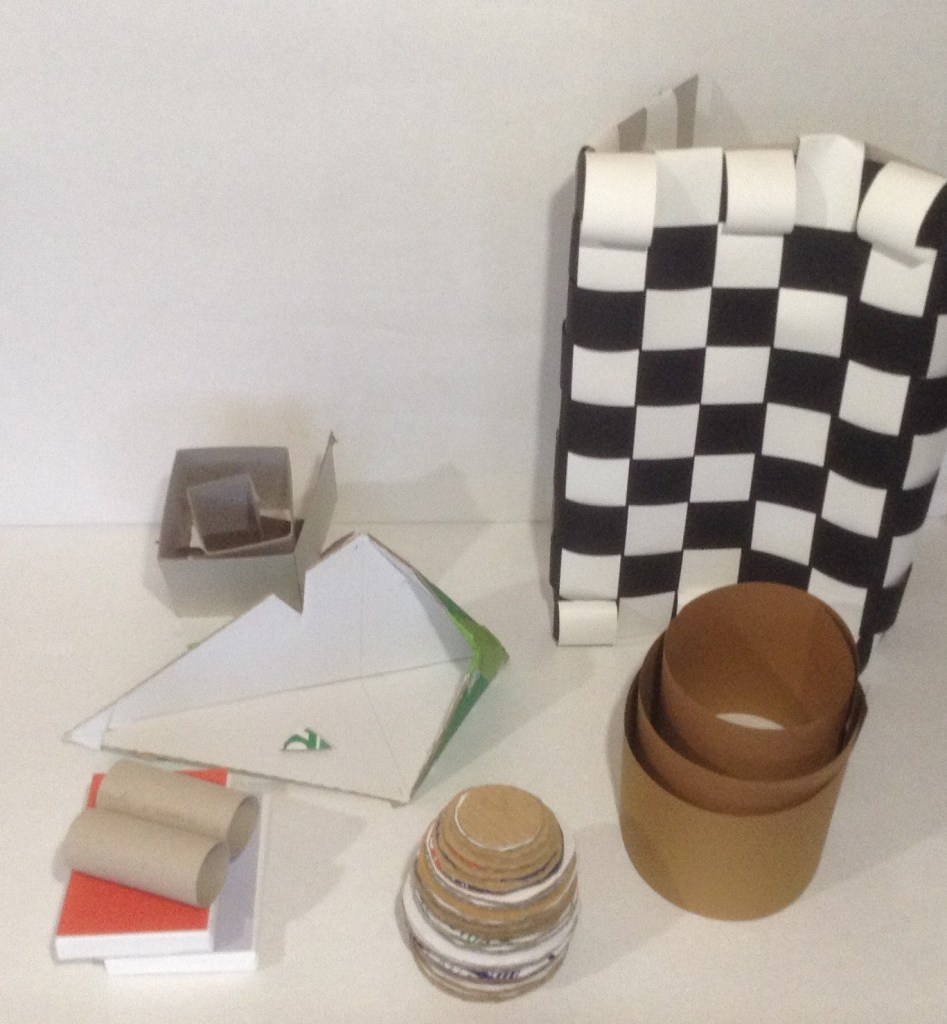
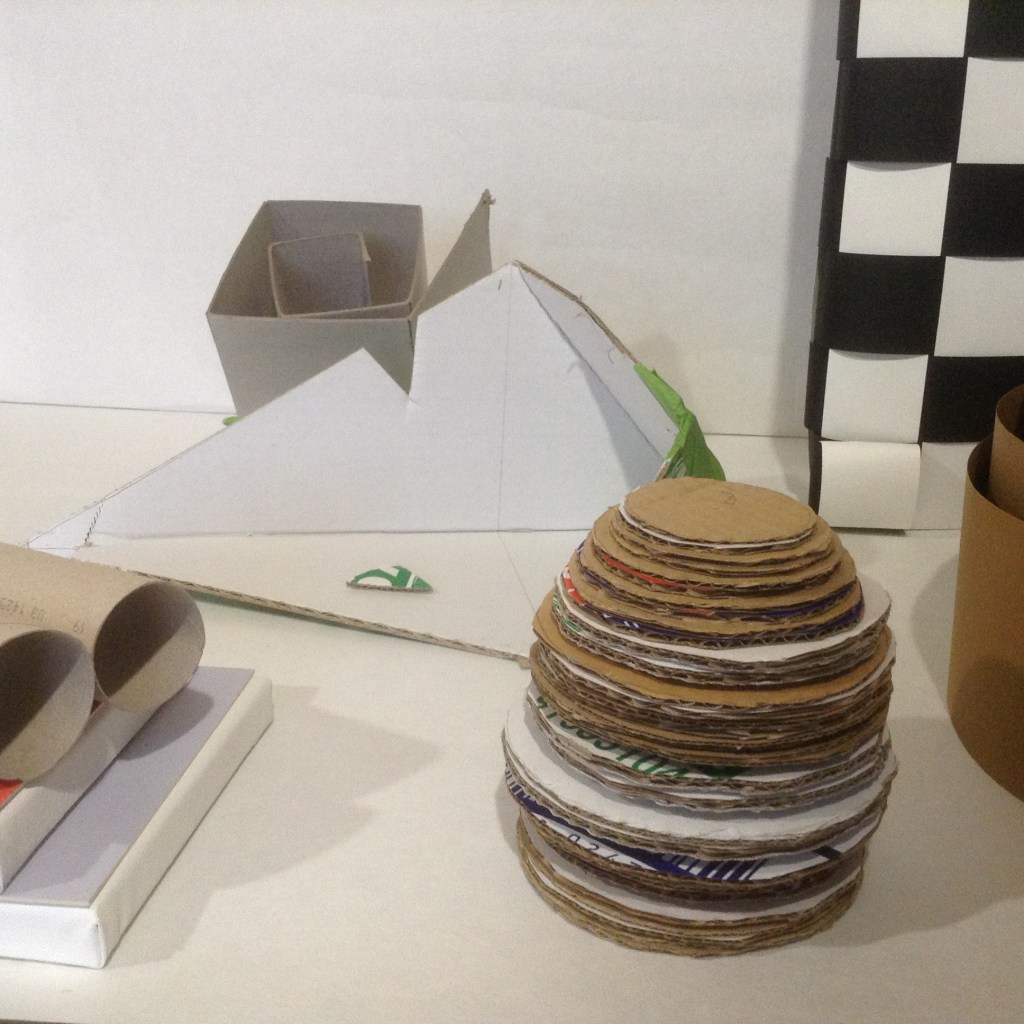
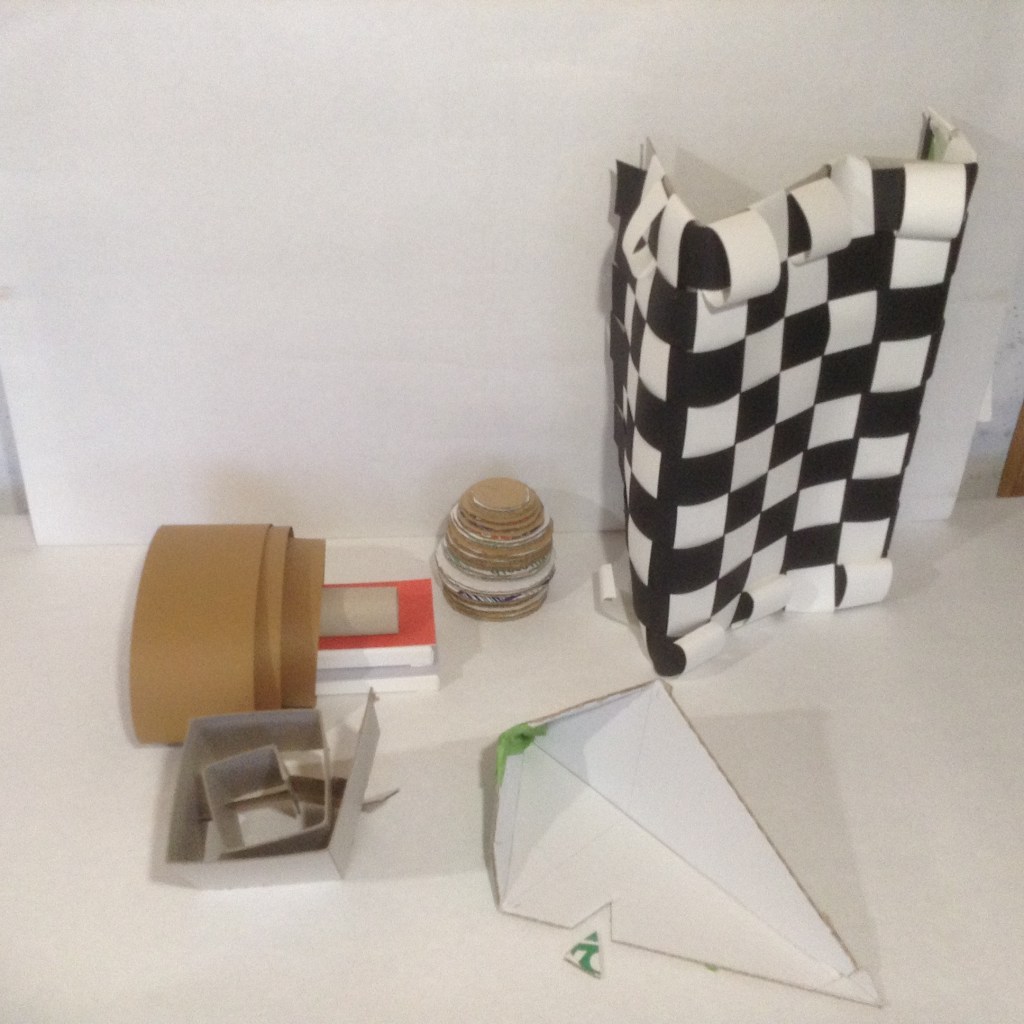
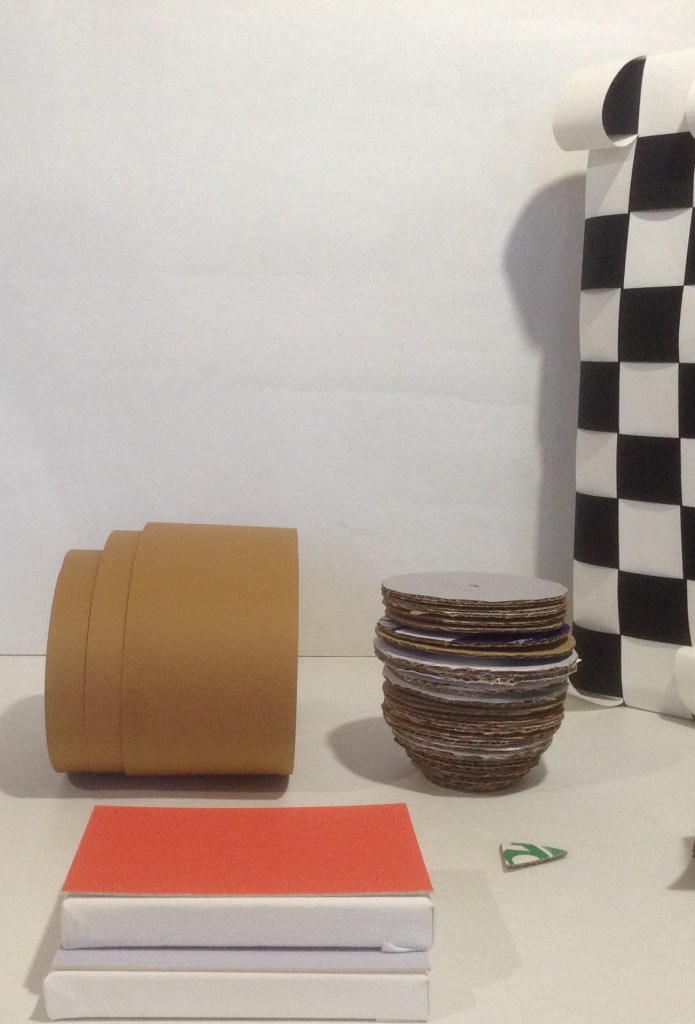
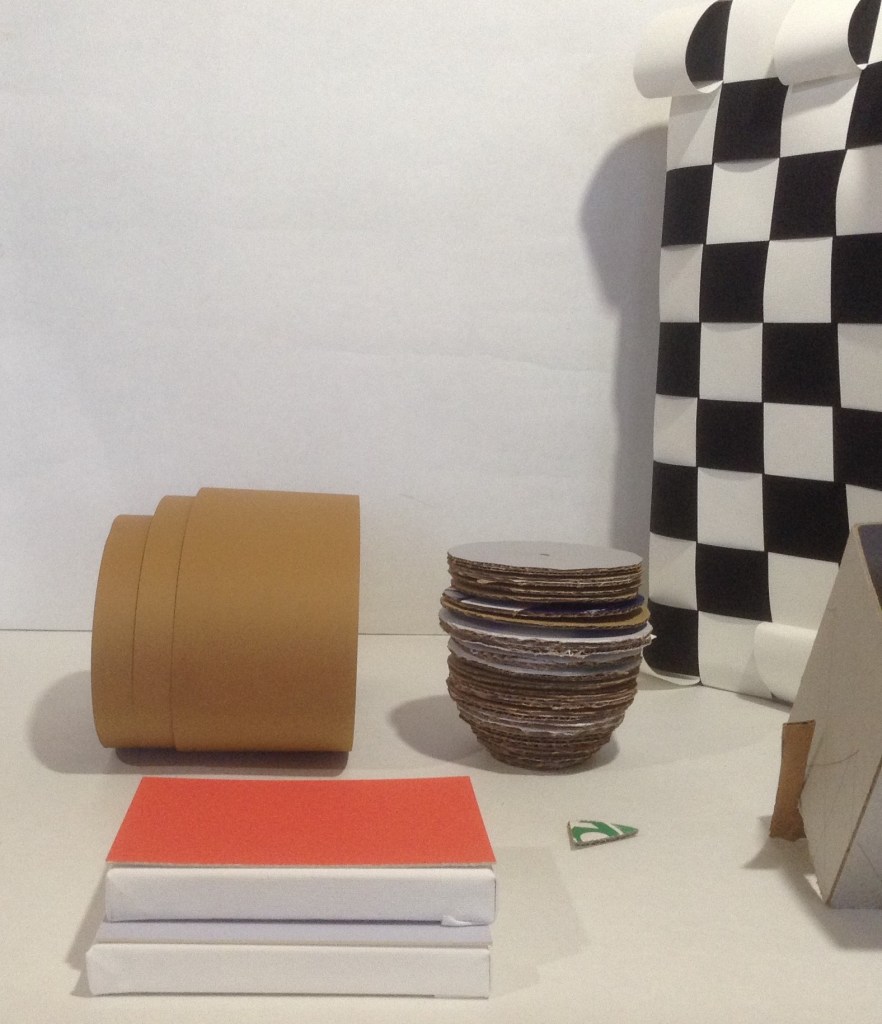
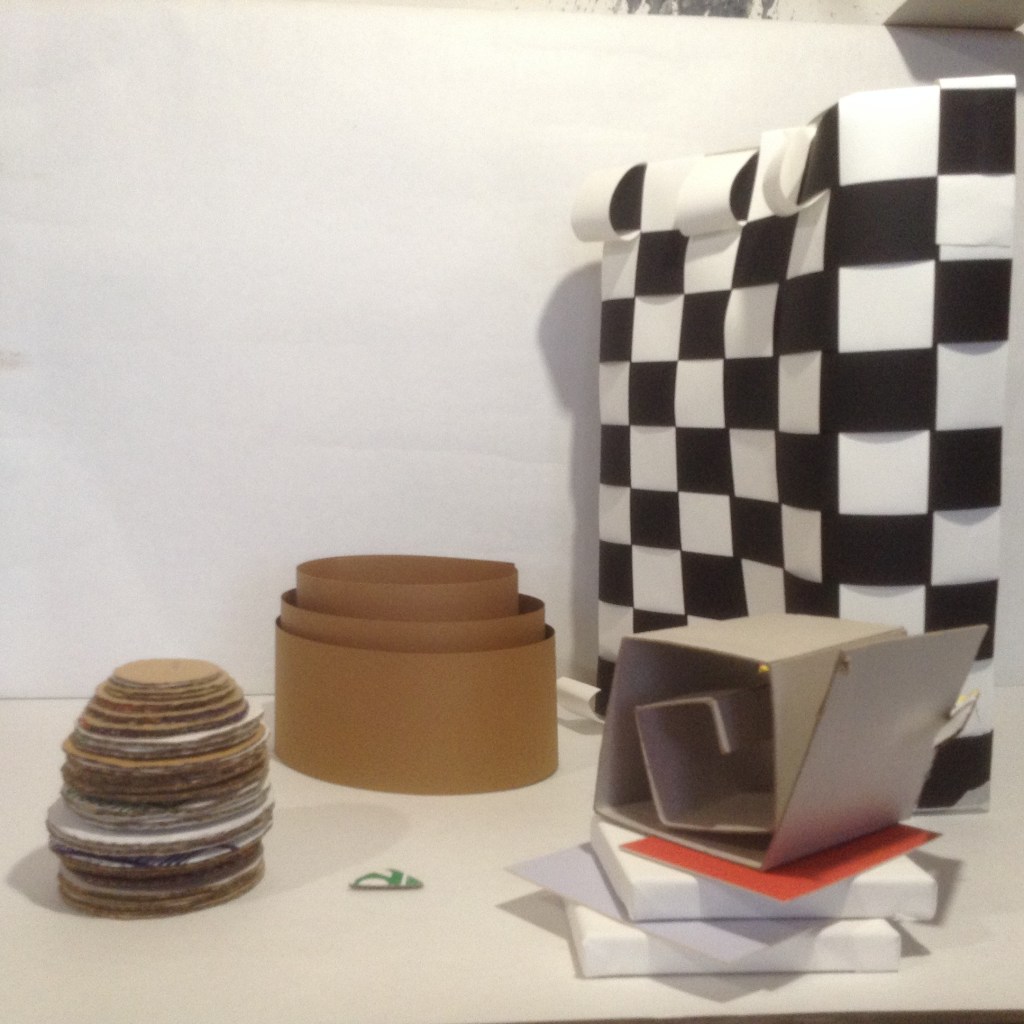
Adding objects and viewing the structures from different viewpoints and angles had spawned further ideas which I hope to explore during project 2 – observe and record. Or was I just over thinking it! I continued to arrange the space on the table, some of which can be seen below.

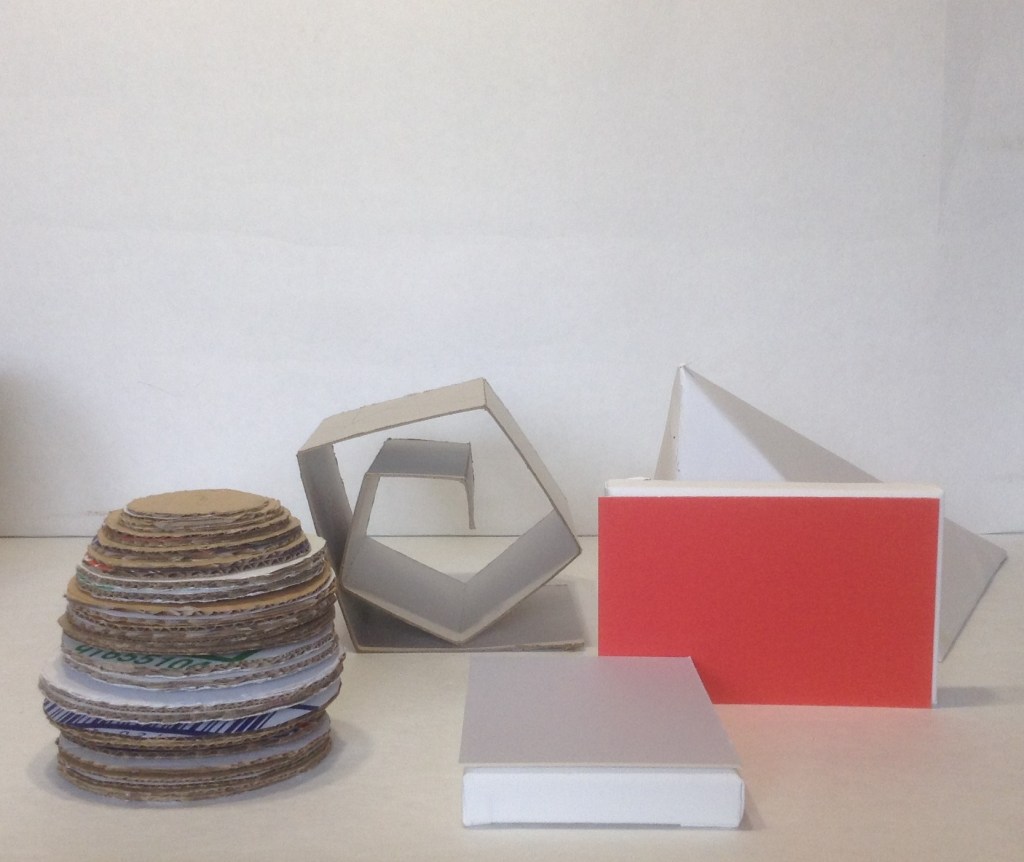
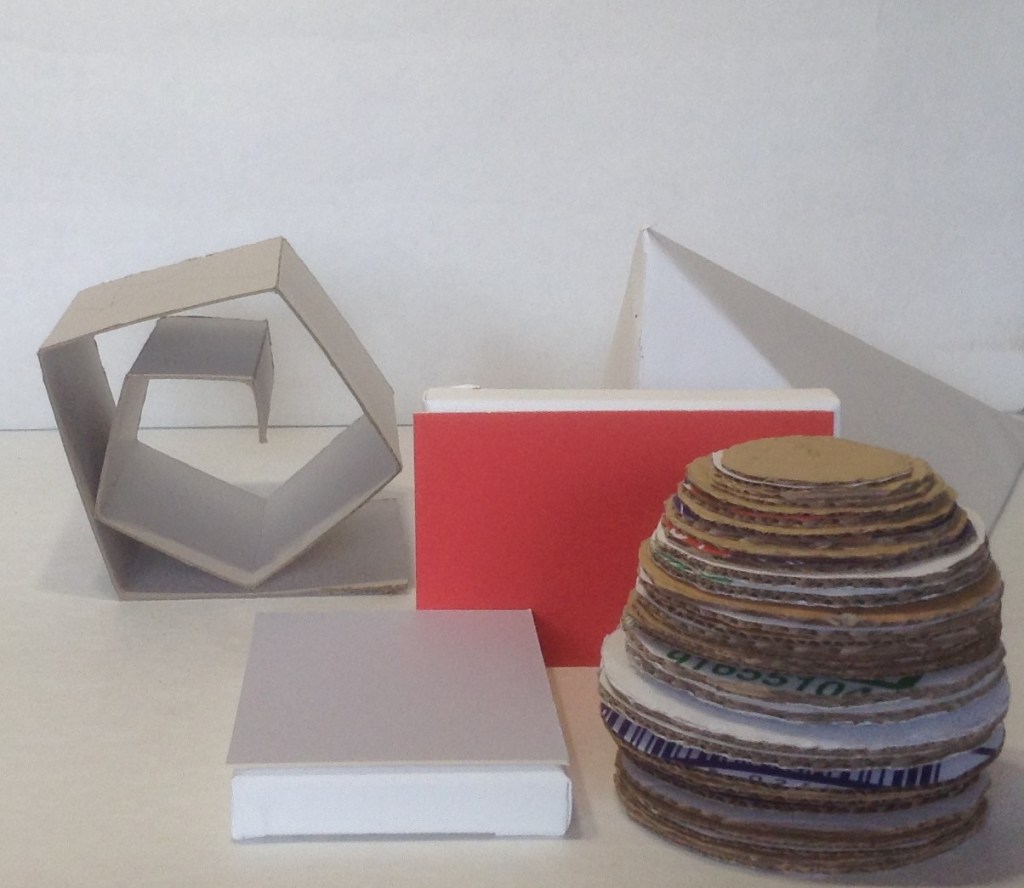
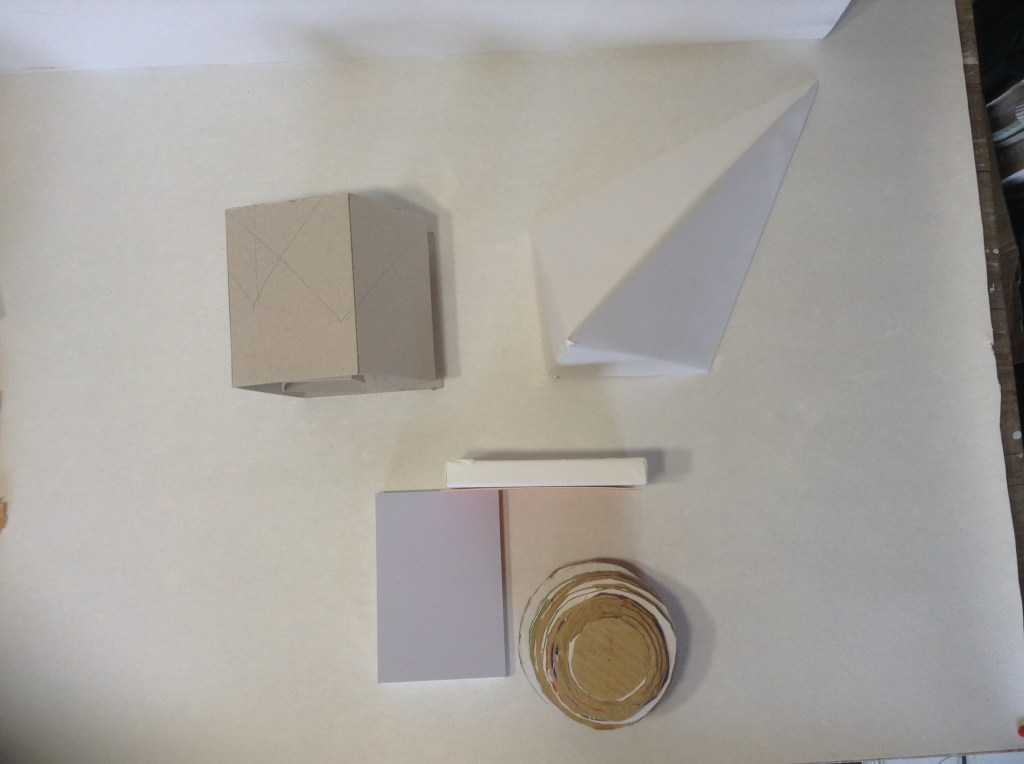
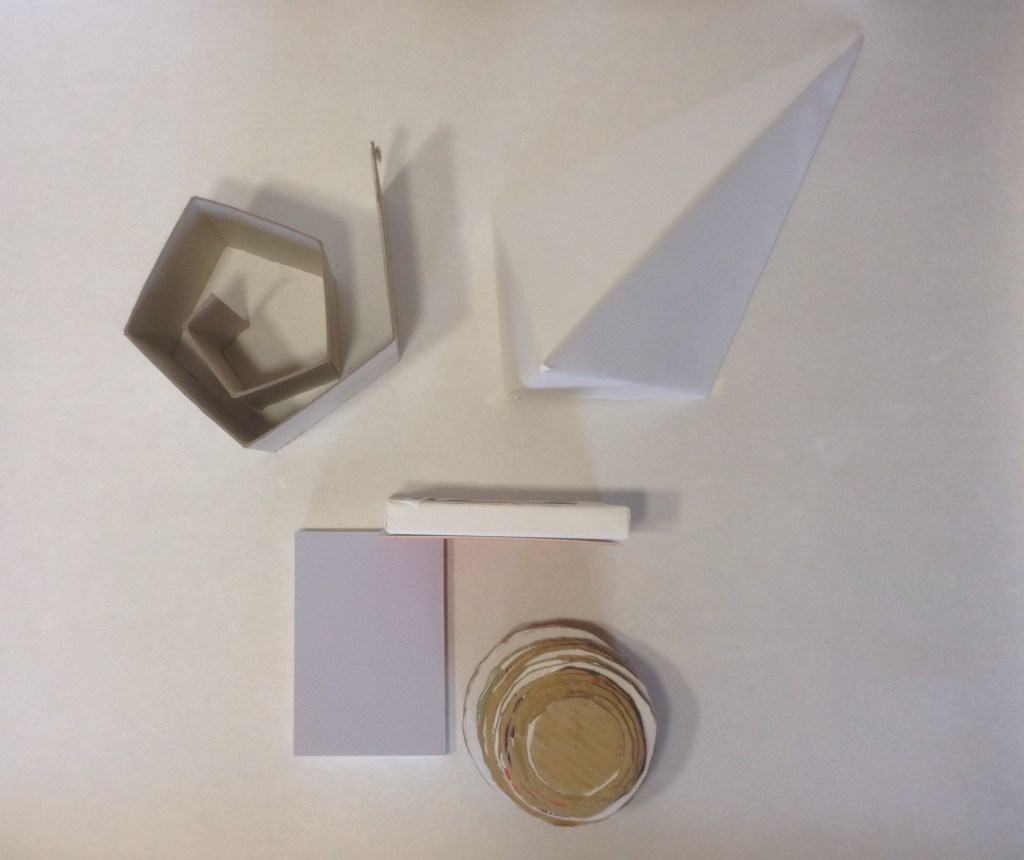
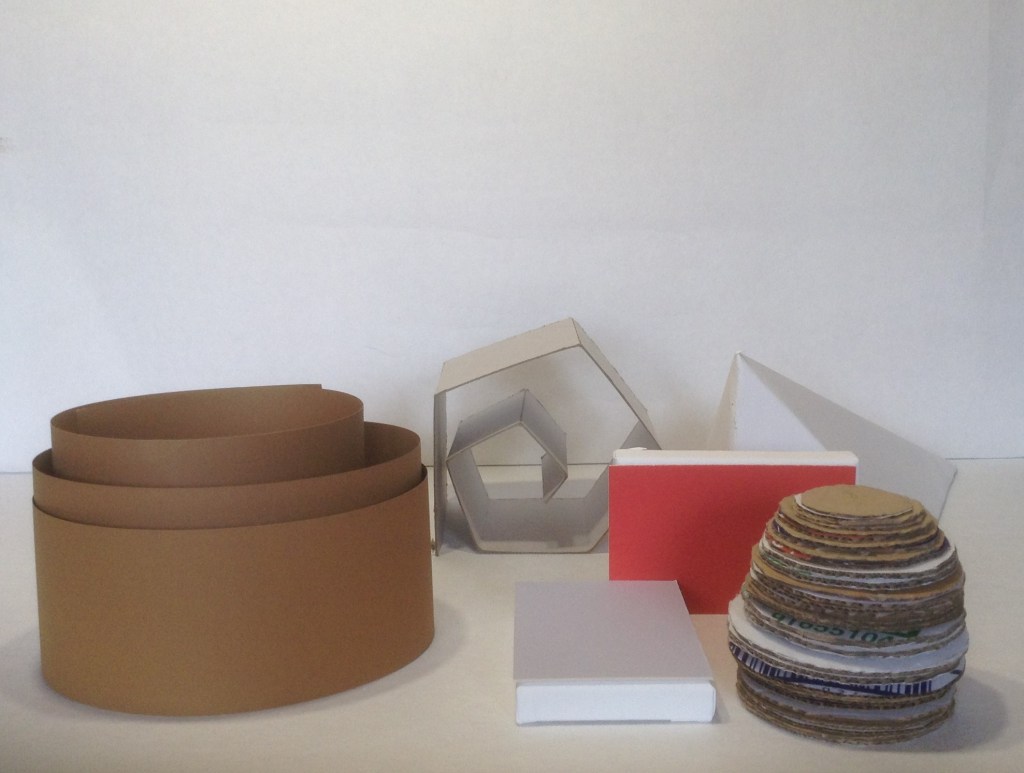


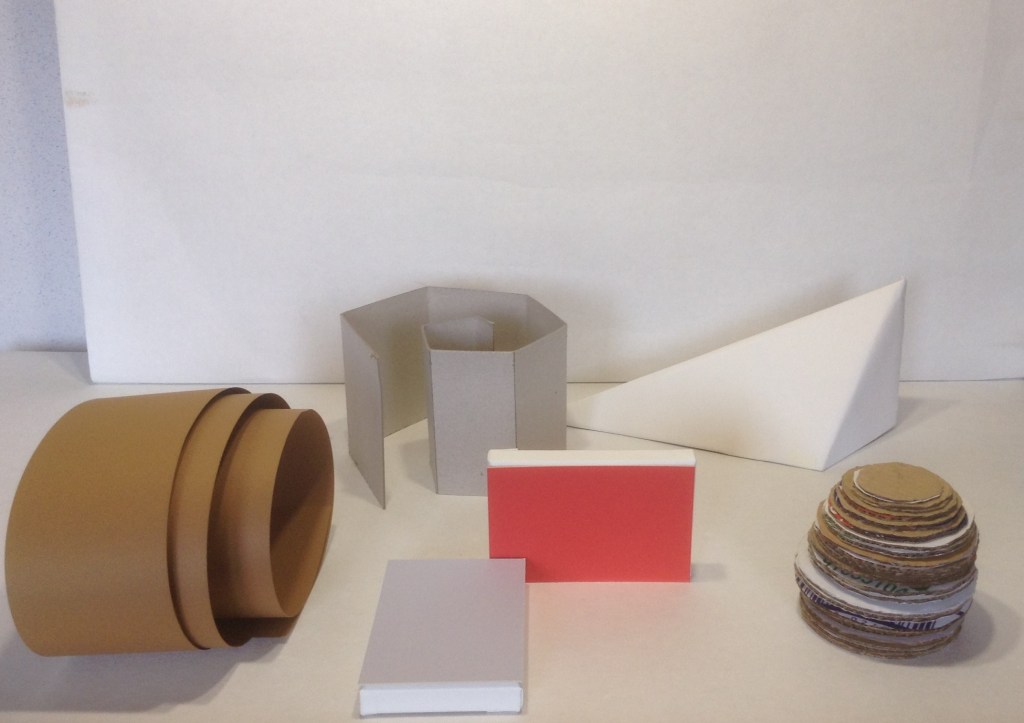
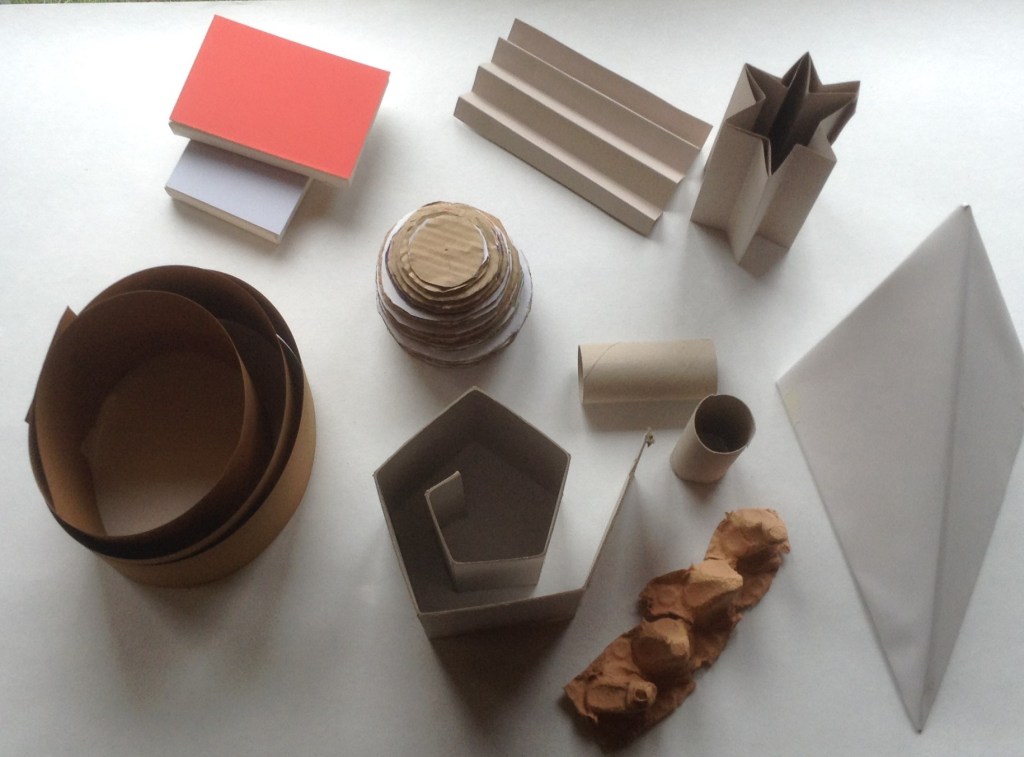
As concurrent activity to this exercise I completed research points 2 and 3, both of which had challenged my ideas of looking at still life compositions, but also made me think about the relationship of objects, colour and space within the composition.
Reference
Long, D. (2014). In its Place. [online] Frieze.com. Available at: https://frieze.com/article/its-place [Accessed 17 Feb. 2020].

